Microgrants

Microgrants

The Micro-scale grants, or ‘microgrants’ program focuses on new eDNA research in strategic categories of interest while also increasing access outside of well-resourced and high-data environments. It is for researchers needing very specific equipment, materials, supplies, or training to achieve their objectives towards eDNA research and analyses.

Our Microgrant Program supports eDNA research in the form of materials, equipment, or educational learning. The primary purpose of these micro grants is to provide funding to traditionally under-funded and under-resourced areas where one or two additional items are critical to the success of a project.

Frequently Asked Questions

Q: What is covered by the microgrant program?

A: It depends! The type of microgrants we offer changes every year, and there is no regular schedule for microgrant offerings. In the past we have funded eDNA workshops, conference fees, DIYNAFLUOR kits, and other small equipment. There is not one set form of microgrant, but we are always open to suggestions from the community if you would like to leave feedback through our website or email us at ednacollab@uw.edu!

Q: I have a really cool eDNA project and need funding, does this qualify under the microgrants program?

A: We love hearing about new eDNA research happening around the world! Unfortunately, we can’t generally fund personal projects, in part because our lab is part of the University of Washington, and it is difficult or impossible to fund external projects outright. 

Q: If you can’t fund my project, how can you support me?

A: We primarily offer support through our microgrants project – which varies year by year – and by spreading information about best practices and connecting people with each other to create support networks. We share information regarding our active microgrants, including information regarding materials and eligibility, through our listserv, which you can sign up for on our contact form via the website

Q: If I want to be a visiting scholar, how do I apply? 

A: Given our limited capacity (there are only a few of us, and often no one full-time), we can’t  accept unsolicited requests to host visiting scholars. However, we are always looking for ways to have people come visit, and if you’d be interested in participating in a future visiting scholar event, please do let us know. We will independently reach out to you to offer participation in the visiting scholars program to the extent we have the capacity. We will provide updates to this page if we are accepting visiting scholars. 

Q: When should I reach out to the eDNA Collaborative and how can I get support for my work?

A: We are here to connect the global community and provide support! If you want to join our global community, email us through our slack form and we can get you connected. If you are working on an eDNA project and want some technical guidance, reach out and we can try to help, either directly through collaboration or indirectly by guiding you to the right expert. Our team is small so we have limited capacity but we will certainly try our best to support you in any way that we can. 

Q: How can I get involved with the eDNA Collaborative?

A: Join our listserv to stay up to date on what’s happening in our global network and stay posted on opportunities within the collaborative. 

Q: What is the eDNA Collaborative and how can I join? Does it cost money?

A: The eDNA Collaborative aims to disseminate, accelerate and reinforce science that brings environmental DNA (eDNA) analysis and techniques out of the lab and into routine practice around the world. There is no application process, membership fees, or any other formalities. If you want to get involved, you can request to join our slack through our slack form, join our listserv to stay connected to our work, or just reach out via email at ednacollab@uw.edu if you want technical support or potentially want to collaborate!

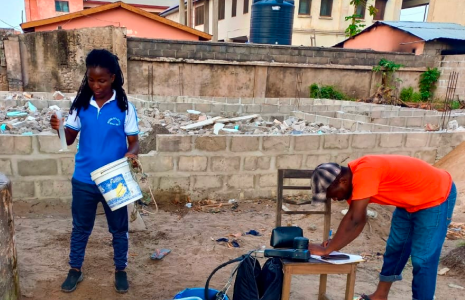
Dr. Charles Abimbola Faseyi and Grace Emuobonuvie Ayeta sampling groundwater in Keta, Ghana.

Photo credit: Stephen Kwaw (All at University of Cape Coast, Ghana)
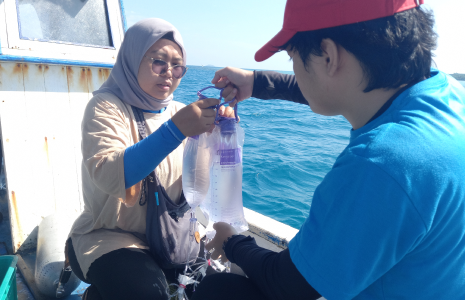
Eka Maya Kurniasih from Graduate School of Engineering and Science, University of The Ryukyus (Okinawa, Japan) and Muhammad Salauddin Ramadhan Djarod from Seacrest – Seagrass Conservation and Research Center (Indonesia) labeling and placing water samples in a cool box for later processing in Karimunjawa, Central Java, Indonesia

Photo credit: Nining Nursalim Diponegoro Marine Biodiversity Laboratory, Universitas Diponegoro (Indonesia)

Scroll to Top