
eDNA Collaborative Publications
Please note this collection is not exhaustive, and there are many eDNA publications world-wide.
Embracing Environmental DNA (eDNA): Trust, Skepticism, and Competence in an Emerging Method
- (Shana Lee Hirsch, Pedro F. P. Brandão-Dias, Sayan Bhattacharjee, Michelle A. Hauer, Yin Cheong Aden Ip,
- Environmental DNA)
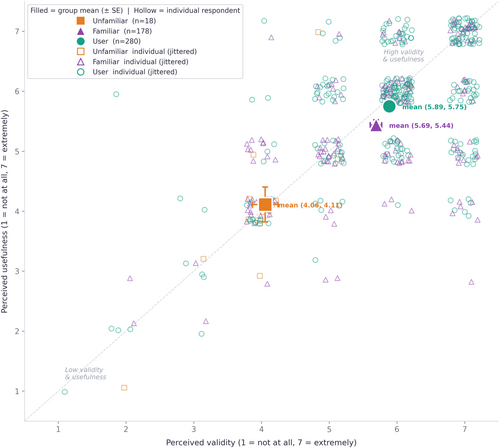
Environmental DNA (eDNA) detection has emerged as a transformative tool for biodiversity monitoring, yet its adoption remains uneven across scientific, management, and policy communities. While existing literature focuses predominantly on technical validation, the social dimensions of eDNA trust and skepticism remain underexplored. This study presents findings from a structured online survey of 476 respondents spanning 33 countries and varying levels of eDNA familiarity. It examines how validity, usefulness, and trustworthiness of eDNA as evidence are perceived and vary with experience. Respondents were grouped by experience: those unfamiliar with eDNA (Group 1, n = 18), those familiar but without direct use (Group 2, n = 178), and active eDNA users (Group 3, n = 280). Quantitative ratings of perceived validity and usefulness increased monotonically with experience, while qualitative coding of open-ended responses revealed that skepticism becomes more nuanced—not more intense—as experience grows. Drawing on social studies of science, we interpret these patterns as characteristic of how scientific communities come to trust emerging methods. Our central finding is that trust in eDNA is fundamentally relational: the competence of the practitioner is inseparable from the credibility of the method. The primary barrier to broader eDNA adoption is therefore not skepticism, but the absence of a legible, trusted community of practice. Expanding responsible adoption requires not only technical standardization but deliberate investment in practitioner literacy, transparent communication of methodological limitations, and attention to the relational contexts in which eDNA evidence is produced and evaluated.
Diel and Artificial Light Effects on Nearshore Communities Revealed by eDNA Metabarcoding
- (Kingsly Chuo Beng, Gledis Guri, Yin Cheong Aden Ip, Pedro F. P. Brandão-Dias, Elizabeth Andruszkiewicz Allan, Diana A. Pazmiño, Adam Brink, Mei-Hong Zhao, Muhammad Danie Al Malik, Fraulein Jan O. Calumpiano, Natalie A. Sawaya, Ouattara Koffi Nouho, Abahi Koudjodé Simon, Florencia Bertoglio, Suzana de Moura Pereira, Yingbei Peng, Melvie Aulya, Marianela Veyñ, Ryan P. Kelly ,
- Environmental DNA, 2026)
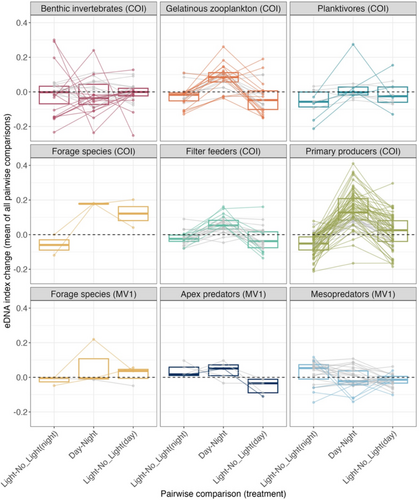
Changes in natural and artificial light presumably have dramatic influences on ecological communities, yet measuring these effects can be challenging due to the difficulty in distinguishing ecological signals from background variability. Here, we used environmental DNA (eDNA) to test for light-associated changes in a nearshore marine community. Over 8 days at Friday Harbor Laboratories, Washington, USA, we sampled seawater at midday and midnight with and without an artificial light treatment, analyzing a total of 84 samples (3 L triplicate samples) using COI and 12S markers on an Oxford Nanopore MinION platform. We detected 229 eukaryotic (COI) and 77 vertebrate (12S) taxa across 11 trophic groups, dominated by primary producers (89 species), benthic invertebrates, and fishes. Metabarcoding captured community restructuring within 30 min, such that we could observe meaningful effects of artificial light treatments at night (particularly among spawning polychaetes), as well as more fundamental community shifts in day vs. night (e.g., with primary producers, gelatinous zooplankton, and filter feeders more common during the day). These techniques offer a means of near-real-time assessment of wholescale changes in ecological communities, and our results here illustrate species- and group-specific effects of light levels that are likely important in structuring nearshore marine communities worldwide.
Non-target detections change the interpretation of environmental DNA communities
- (Megan R Shaffer, Elizabeth Andruszkiewicz Allan, Ryan P Kelly, Nicolaus G Adams, Stephanie K Moore, Elizabeth Brasseale, Pedro FP Brandão‐Dias, Olivia M Scott, Andrew O Shelton, Kim M Parsons,
- Pensoft Publishers, 2026)
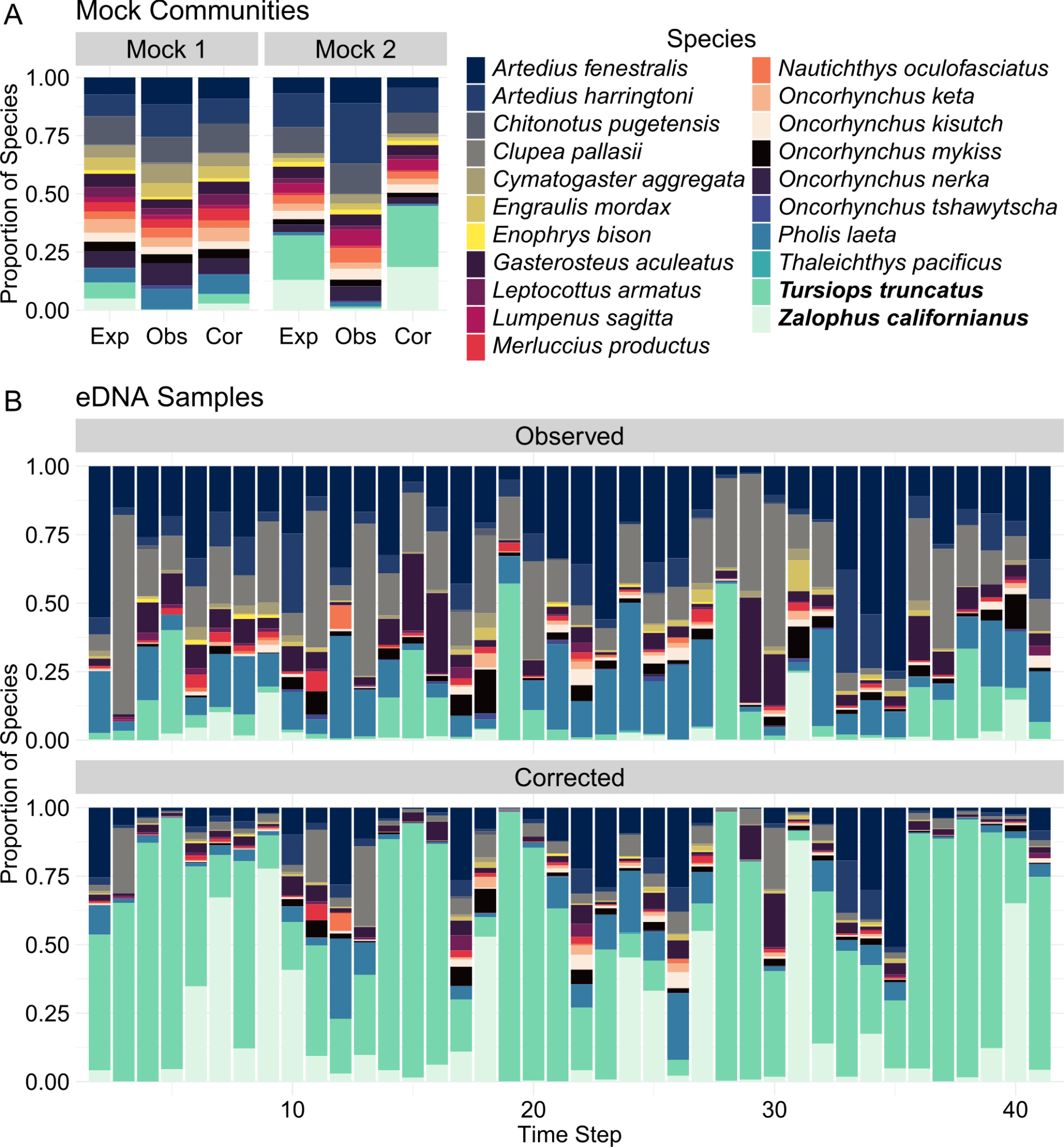
Environmental DNA (eDNA) samples capture mixtures of DNA from a wide range of organisms and often yield metabarcoding datasets that include taxa beyond the intended scope of the primer set used. The presence of this non-target DNA (termed “molecular bycatch”) can make it difficult to interpret trends in the primary targets. Here, we present an example in which including non-target detections alters the ecological interpretation of a metabarcoding time series and highlight a quantitative approach that can account for molecular bycatch in a biologically meaningful way. We collected high-resolution temporal samples from an estuary (Hood Canal, Washington, USA), using a surface-stationed autonomous sampler over a 48-hour period. We metabarcoded samples with a primer set that targets fish, but also amplifies (non-target) marine mammals with lower efficiency. We then transformed sequence read proportions into absolute DNA concentrations using a mock community–based bias correction and single-species concentrations via droplet digital PCR (ddPCR). We found that non-target mammals were substantially under-represented in the raw metabarcoding data relative to their biased-corrected proportions. Cross-validation of this quantitative metabarcoding approach showed that predicted DNA concentrations closely matched independent ddPCR measurements for total 12S DNA and two single-species concentrations (Atlantic bottlenose dolphin and Pacific herring) in both mock communities and environmental samples. After estimating absolute species concentrations for all species, we revealed species-specific patterns that were not apparent in the observed read counts alone. Our results underscore the importance of correcting for species-specific amplification bias when evaluating community composition from metabarcoding data, particularly in the context of non-target detections.
Tracking Pacific salmon migrations with a prototype eDNA autosampler
- (Marshal S Hoy, Austen C Thomas, Dorothy M Chase, Ryan P Kelly, Sarah Hensley, Carl O Ostberg,
- Frontiers in Ecology and Evolution, 2026)
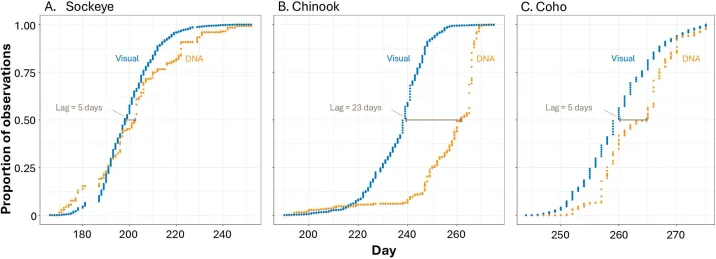
Pacific salmon (Oncorhynchus spp.) are keystone species that support commercial and recreational fisheries and play a significant role in Indigenous cultures. As a keystone species, they are commonly monitored to assess population metrics and adult and juvenile migration. Environmental DNA (eDNA) has been successfully applied to salmon monitoring, but these efforts have relied on manually collected samples which can limit temporal resolution and increase field effort. Here, we evaluated a prototype autonomous eDNA sampler for fine-scale tracking of adult salmon migrations in the Lake Washington Ship Canal (LWSC) in Washington state, USA. The autosampler was deployed approximately 3 km upstream of the Ballard Locks, where returning adult salmon are counted daily, for 4 months during the adult salmon return in 2022, and it collected eDNA samples twice daily (day and night) onto self-preserving filters. We tested eDNA samples for Chinook Salmon (Oncorhynchus tshawytscha), Sockeye Salmon (O. nerka) and Coho Salmon (O. kisutch) and results were compared with daily adult counts at the Ballard Locks. eDNA detection lagged visual counts by approximately 5 days for Sockeye and Coho salmon and approximately 23 days for Chinook Salmon. The extensive time lag in eDNA detection for Chinook Salmon was likely due to a thermal barrier, delaying their migration through the LWSC. We found no clear effect of day versus night sampling on eDNA detection probability. Two additional experiments were performed: one to assess eDNA degradation on used self-preserving filters stored in the autosampler and another to assess whether our 3 L system flush volume was sufficient to prevent residual eDNA from being carried over from one sample to the next. We found no apparent eDNA degradation but potential for sample-to-sample carry over at this flush volume. Our study highlights the need to consider strategic placement of the autosampler intake to optimize eDNA capture and testing of flush volumes to minimize sample-to-sample carryover. Autonomous eDNA sampling provided efficient, high-frequency, and fine-scale surveillance of salmon migrations and offers a scalable approach for a wide variety of monitoring applications.
Vertebrate biodiversity via eDNA at the air-water interface
- (Yin Cheong Aden Ip, Pedro F.P. Brandão-Dias, Gledis Guri, Elizabeth Andruszkiewicz Allan, Ryan P. Kelly,
- ScienceDirect, 2026 )
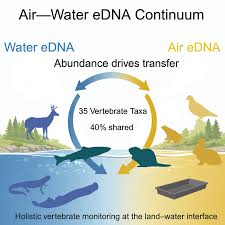
Aquatic, aerial, and terrestrial habitats exist along a continuum, with biomass and energy flows transporting genetic material across environmental boundaries. Here, we use environmental DNA (eDNA) metabarcoding to characterize genetic information exchange between water and air. From 27 paired samples collected at two urban-wildland interface sites using passive air sampling and active water filtering, we recovered 35 vertebrate taxa, with 40% detected in both media, ranging from aquatic salmon to terrestrial cottontail rabbit. Cross-medium detection probability scales with DNA abundance: logistic models identify ∼660 water reads and ∼14 air reads as 50% detection thresholds. Peaks in coho and Chinook salmon eDNA in water and air align within 24 h, demonstrating that passive air sampling reflects temporal abundance trends. Low-abundance taxa appear sporadically, reflecting stochastic behavior at low DNA concentrations, and reliable detection requires intensified sampling in the primary habitat. Together, these findings establish a unified framework for holistic vertebrate biodiversity monitoring at the land-water interface, with applications in conservation, invasive species early warning, and One Health surveillance.
The International eDNA Standardization Task Force (iESTF): Towards development of inclusive international standards for eDNA biodiversity monitoring
- (Mehrdad Hajibabaei, Florian Leese, Cathryn Abbott, Hitoshi Araki, Donald Baird, Pedro Beja, Kristy Deiner, Hideyuki Doi, Nicole Fahner, Kelly D Goodwin, Margaret E Hunter, Ryan Kelly, Katy Klymus, Michio Kondoh, Ntanganedzeni Mapholi, Toshifumi Minamoto, Xavier Pochon, Teresita M Porter, Susanna Theroux, Alejandro Trujillo-Gonzalez, Alison Watts, Hiroki Yamanaka, Xiaowei Zhang, John Darling, Kristian Meissner,
- Pensoft Publishers, 2026 )
Advancing Environmental DNA Applications in Southeast Asia Through Networking, Adaptable Standard Development, and Capacity Building
- (Mark Louie D. Lopez, Yin Cheong Aden Ip, Danial Hariz Zainal Abidin, Danwei Huang, Daphne Z. Hoh, Elfritzson M. Peralta, Harris Wei-Khang Heng, Itchika Sivaipram, Kenneth Xavier O. Sanchez, Maslin Osathanunkul, May Thu Thu Win, Minh Le, Ni Kadek Dita Cahyani, Rebecca Ker Loh, Ruby Vidia Kusumah, Sekar Larashati, Severino Salmo III, Thomas N. E. Gray, Elizabeth Andruszkiewicz Allan, Ryan Kelly, Shana Lee Hirsch,
- Environmental DNA, 2026 )
Environmental DNA (eDNA) has become a transformative tool for biodiversity monitoring and conservation across Southeast Asia, one of the world’s most critical biodiversity hotspots. Despite its potential, several factors hinder the adoption and scalability of eDNA tools in the region. In this perspective paper for the special issue “Understanding the Current Use of Environmental DNA in Southeast Asia: Promoting Accessibility through Networking and Capacity Building,” we synthesize our insights as eDNA researchers and end-users across the region to identify key challenges and highlight opportunities for enhanced regional networking, capacity building, and collaboration. Key challenges we identified include limited resources, the lack of standardized protocols, particularly in the context of metabarcoding, and the lack of training in eDNA data analysis. Hurdles such as outdated infrastructure, expensive reagents and equipment costs, logistical barriers, and limited bioinformatics expertise also persist. Furthermore, initiatives to advance and standardize eDNA methods, protocols, and technologies are often led by the Global North, which may neglect to account for Southeast Asia’s distinct ecological landscape and resource challenges. Based on these insights, our key recommendations include the development of regional eDNA laboratories, the creation of adaptable standards that reflect the region’s wide range of biodiversity and environmental conditions, investment in eDNA training, and building local bioinformatics expertise. We also highlight major themes such as the need for adaptive standards, regional collaboration, and potentially repurposing COVID-19 surveillance infrastructure for eDNA studies, demonstrating how existing molecular platforms can be leveraged for biodiversity monitoring. By aligning regional efforts with global standards while addressing local needs, researchers in Southeast Asia can maximize the potential of eDNA for biodiversity conservation and ecological research. Future eDNA research in Southeast Asia will depend on continued innovation, collaboration, and the development of methodologies tailored to the region’s unique biodiversity.
Mapping the marine distribution of eulachon (Thaleichthys pacificus) in the Northeast Pacific using environmental DNA
- (Owen R. Liu, Andrew O. Shelton, Ana Ramón-Laca, Krista M. Nichols, Eric J. Ward, Elizabeth M. Phillips, Jeannette E. Zamon, Abigail Wells & Ryan P. Kelly ,
- Communications Biology, 2026)
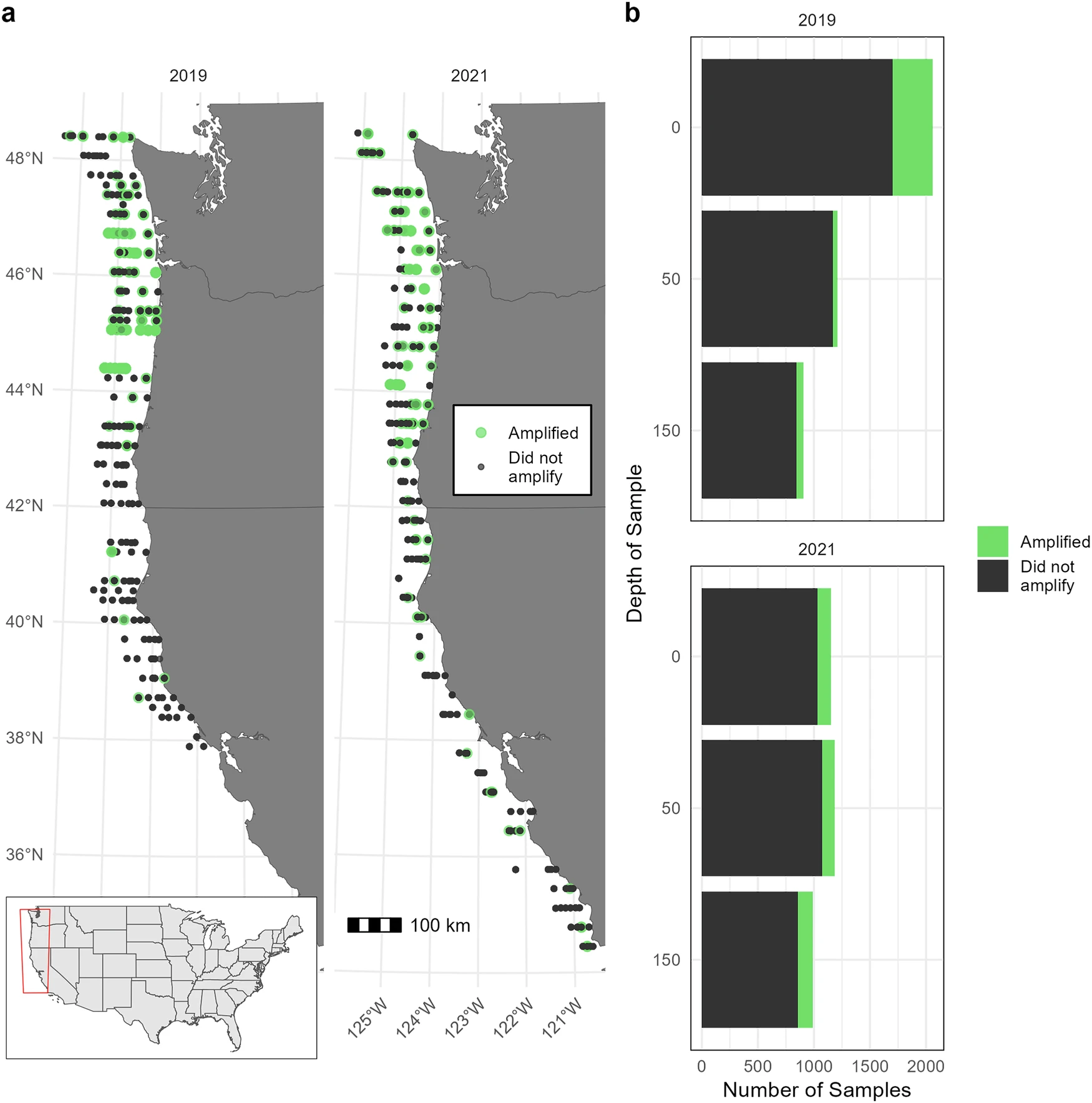
Rare species are difficult to observe in the wild, particularly in the ocean where large spatial scales and accessibility hinder effective sampling. Environmental DNA (eDNA) is a non-destructive, scalable sampling method with the potential to inform the distribution of rare species in marine ecosystems. We sample eDNA within the California Current ecosystem to estimate the distribution of eulachon (Thaleichthys pacificus), a threatened anadromous smelt ranging along the coastal Northeast Pacific. We amplify eulachon DNA from thousands of water samples collected at night across two years and more than 200,000 square kilometers along the U.S. west coast. We then use spatiotemporal models to derive quantitative estimates of eulachon DNA across space, depth, and time relative to environmental covariates. We find that eulachon DNA has a distribution weighted towards the ocean surface, spatially associated with major river mouths and productive offshore banks. Temperature and prey density are key covariates, with eulachon more likely to be found in warmer waters with higher prey concentrations. We discuss how our results can augment the information currently used in eulachon recovery planning, and describe the wide applicability of our statistical models for estimating distribution and abundance for other species of conservation concern.

Understanding practical barriers to the global adoption of environmental DNA (eDNA) methods, tools, and standards
- (Shana Hirsch, Yin Cheong Aden Ip, Pedro F. P. Brandão-Dias, Elizabeth Andruszkiewicz Allan & Ryan Kelly ,
- BMC Research Notes, 2026 )
Environmental DNA (eDNA) is a rapidly emerging data source with the potential to support environmental monitoring and biodiversity conservation around the world. Current efforts to standardize eDNA methods and reporting are aimed at strengthening credibility and supporting adoption. In doing this, however, researchers must be mindful of diverse capacities and ecological contexts both regionally and around the world. The objective of our research is to understand how international standards for eDNA may support or hinder the uptake of eDNA methods and tools for conservation and biodiversity work. This was accomplished through two interactive workshops that brought together eDNA researchers and practitioners from around the world to surface broad and specific barriers to uptake of eDNA methods and tools.
Estimating Organism Abundance Using Within‐Sample Haplotype Frequencies of eDNA Data
- (Pedro FP Brandão‐Dias, Gledis Guri, Megan R Shaffer, Elizabeth Andruszkiewicz Allan, Ryan P Kelly,
- Molecular Ecology Resources, 2026 )
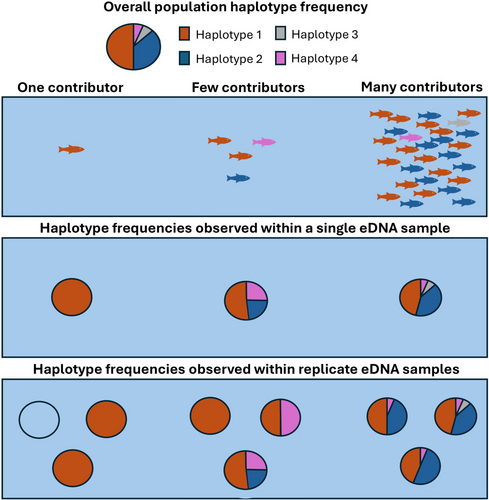
Environmental DNA (eDNA) provides powerful insights into species presence and community composition but remains limited in its capacity to infer species abundance or population structure. Here, we show that the deviation between within-sample haplotype frequencies and the overall population-level haplotype frequencies can be used to estimate the number of individual contributors to a given sample. We first establish the theoretical framework for approximating population haplotype frequencies directly from eDNA data, enabling application even in the absence of tissue-derived references. Building on this foundation, we introduce a maximum likelihood estimator to infer the number of contributors and assess its performance through simulations spanning a range of haplotype frequency distributions and noise scenarios. These approaches assume that all samples are drawn from a single, panmictic population. We find that accurate estimates are attainable when haplotypes are sufficiently variable, population frequencies are well-characterised, and samples are large enough to capture frequency deviations. By bridging population genetic theory and eDNA, our method complements existing molecular approaches and offers a novel path towards quantifying abundance from eDNA metabarcoding data.
Long-range PCR amplification and nanopore sequencing of 8-10 kb mitochondrial fragments from environmental DNA
- (Stephanie A Matthews, Olivia M Scott, Yin Cheong Aden Ip, Elizabeth A Allan, Ryan P Kelly,
- bioRxiv, 2026 )
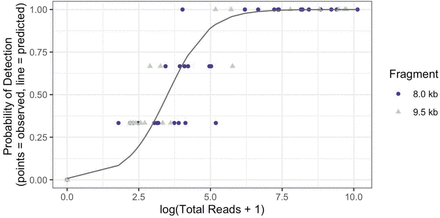
Long-read sequencing data can provide increased taxonomic resolution and genomic linkage information that is otherwise impossible to obtain from short-read amplicon or shotgun sequencing. However, the use of long-read sequencing for environmental DNA (eDNA) analysis has thus far been limited by both the apparent rarity of long DNA molecules in eDNA samples and the lack of established bioinformatics workflows for long-read metabarcoding, particularly from mixed template samples. Here, we report nanopore sequencing of 8.0 – 9.5 kb mitochondrial fragments obtained from mesocosm and field eDNA samples, amplified with long-range PCR (LR-PCR) using primers designed to preferentially amplify teleost mitogenomes We recovered half-mitochondria from 13 fish species in field-collected samples (Puget Sound in Washington State, USA), as well as from approximately half of the fish species inhabiting the positive control mesocosm (the Seattle Aquarium). Among biological replicates, we observed consistent detection of read-abundant species, while there was greater stochasticity in the presence of rarer species. We demonstrate that long fragments can be obtained from standard eDNA samples and successfully amplified and sequenced to obtain species identifications despite higher error rates characteristic of nanopore sequencing. We present both laboratory methods and an accessible bioinformatic pipeline for obtaining and analyzing LR-PCR amplified fragments from eDNA, providing a framework for future long-read metabarcoding studies.
Integrating eDNA and acoustic-trawl data to provide small pelagic biomass estimates for fish stock assessment
- (Cristina Claver, Beatriz Sobradillo, Iñaki Mendibil, Oriol Canals, Guillermo Boyra, Leire Ibaibarriaga, Ryan P Kelly, Naiara Rodríguez-Ezpeleta,
- ICES Journal of Marine Science, 2026 )
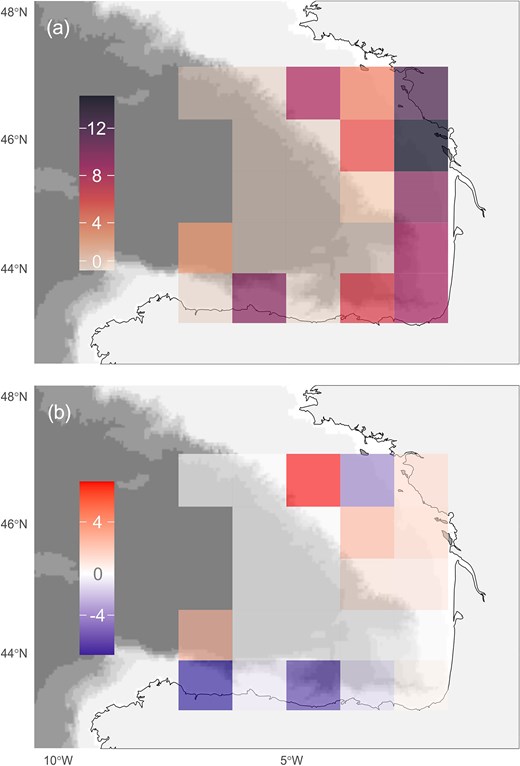
Accurate abundance estimates of fisheries resources are essential for sustainable fisheries management. In response to the growing need for developing more accurate and cost-effective biomass estimation methods, the analysis of environmental DNA (eDNA) has recently emerged as an alternative for fish abundance quantification. However, practical approaches for integrating eDNA data into fisheries assessment remain limited. Here, we introduce a Bayesian joint model that combines acoustic-trawl and eDNA data to estimate fish biomass. Utilizing 209 water eDNA samples and 196 acoustic transects, the model was applied to estimate the distribution and abundance of the European anchovy (Engraulis encrasicolus) in the Bay of Biscay. The joint model produced similar estimates to those derived from acoustic observations alone and consistent with known spatial patterns of anchovy, with eDNA data suggesting a broader distribution and potentially higher abundance. This research demonstrates the value of incorporating eDNA data as a complement to acoustic-trawl for stock assessment and illustrates the versatility of joint Bayesian models and their potential application to various species and datasets. Ultimately, our work opens new avenues for more holistic fisheries assessment, underscoring the growing role of eDNA in that context.
Fast, Flexible, Feasible: A Transparent Framework for Evaluating eDNA Workflow Trade‐Offs in Resource‐Limited Settings
- (Yin Cheong Aden Ip, Elizabeth Andruszkiewicz Allan, Shana Lee Hirsch, Ryan P Kelly,
- Molecular Ecology Resources, 2026 )
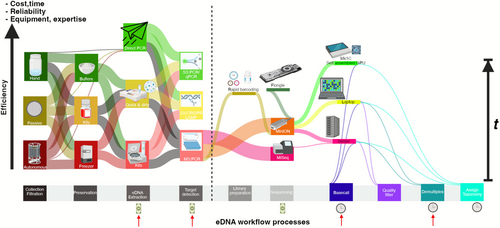
Environmental DNA (eDNA) analysis enables biodiversity monitoring by detecting organisms from trace genetic material, but high reagent costs, cold-chain logistics and computational demands limit its broader use, particularly in resource-limited settings. To address these challenges and improve accessibility, we directly compared multiple workflow components, including four DNA extraction methods, two primer sets, three Nanopore basecalling models, and two demultiplexing pipelines. Across 48 workflow combinations tested in an aquarium with 15 fish species, we mapped trade-offs between cost, sensitivity, and processing speed to assess where time and resource savings are possible without compromising detection. Workflows using the Qiagen Blood and Tissue (BT) extraction kit and amplification using the MiFish-U primer set provided the highest sensitivity, detecting ≥ 12 of 15 species by ~3–5 h and reaching the 15-OTU plateau at ~8–10 h with Oxford Nanopore’s high accuracy (HAC) basecalling model. Chelex, an alternative lower-cost extraction method, showed partial recovery only (≤ 9 OTUs by 61 h) even with extended sequencing, and did not recover all 15 OTUs. DirectPCR and QuickExtract offered field-friendly extraction alternatives that achieved comparable recovery in ~10–12 h, though their cost-effectiveness varied. While the MarVer1 primer was designed to broaden vertebrate detection, it recovered the same fish species as MiFish-U, though with fewer total reads. Real-time sequencing trials (0–61 h) revealed that high-efficiency workflows (BT + HAC) reached detection plateaus rapidly, indicating sequencing time can be reduced without sacrificing accuracy. The OBITools4 bioinformatics pipeline enabled automated demultiplexing but discarded more reads than an alternative, ONTbarcoder2.3, which retained low-abundance taxa at the cost of manual curation. Rather than identifying a single ‘best’ workflow, this study provides a transparent decision framework for prioritising cost, speed, and sensitivity in eDNA applications, supporting scalable, cost-effective eDNA monitoring in resource-limited settings.
Fate and transport of environmental DNA: mapping the knowns and unknowns
- (Pedro FP Brandão-Dias, Elizabeth Andruszkiewicz Allan, Elise D Snyder, Ryan Guillemette, Lauren Sassoubre, Bettina Thalinger, Alexandria B Boehm, Kristy Deiner, Ryan P Kelly, Susanna Theroux,
- Research Square, 2025 )
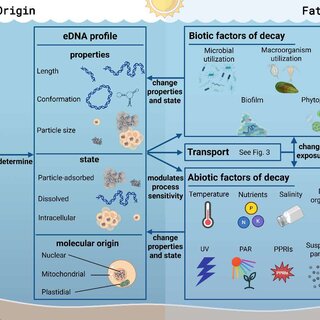
The use of environmental DNA (eDNA) in routine biomonitoring is transforming our ability to detect and quantify aquatic species. However, translating these indirect molecular detections into ecological insight requires understanding how long eDNA persists and how it moves through the environment. Here, we present a systematic mapping review of the controls on eDNA fate and transport and provide the most comprehensive synthesis to date of mechanistic evidence across aquatic systems. Drawing on over 200 manuscripts, we introduce the concept of the eDNA profile, defined by state, molecular properties, and molecular origin, as a unifying framework for interpreting why eDNA signals differ across environments and taxa. Where eDNA profile has been quantified, source, state, particle size, fragment length, and molecular origin measurably alter decay and transport, confirming that different eDNA forms experience distinct fates and movement distances within aquatic systems. Using this lens, we then synthesize the evidence for the effects of abiotic factors, biotic factors, and transport on eDNA fate. For abiotic factors, we find that temperature, pH, nutrients, suspended particles, substrates, dissolved organic matter, and dissolved oxygen measurably modulate eDNA decay, whereas light exposure (UV and visible light) and salinity show weak or no direct effects across studies. For biotic factors, we conclude that microbial activity, extracellular enzymes, and biofilms are likely major drivers of eDNA degradation, although the identities, functions, and dynamics of responsible communities are poorly resolved. Finally, we show that transport patterns differ strongly among aquatic systems, with depth-structured and short-range signals common in lakes, highly variable downstream distances in rivers that depend on discharge and eDNA particle size, and longer potential transport in coastal and open-ocean systems that often still yield predominantly local signals. In these advective environments, robust interpretation commonly requires coupling eDNA observations with hydrological and oceanographic circulation models. Finally, we highlight three priorities for a predictive framework: (1) explicitly resolve eDNA profiles, (2) isolate the causal mechanisms that govern decay and removal, and (3) identify which microbes and microbial processes drive degradation across environments. Our goal is to integrate the field, highlight critical gaps, and ultimately advance the interpretation of eDNA-based detections for biodiversity monitoring.
eDNA reveals spatial differences in species composition of protected rockfishes
- (Stephanie A. Matthews , Olivia M. Scott, Meredith V. Everett, Megan R. Shaffer, Elizabeth Andruszkiewicz Allan, Andrew O. Shelton, Gregory D. Williams, Abigail Wells, Krista M. Nichols, Ryan P. Kelly,
- PLOS One, 2025 )
Rare species are difficult and time-consuming to detect, but environmental DNA (eDNA) methods can be used to increase data availability for monitoring and management. Here, we use the diverse rockfish species flock (genus Sebastes) to demonstrate the utility of eDNA as a tool for detecting rare and difficult to observe species in the marine environment. We describe the identification of a phylogenetically informative gene region for eDNA metabarcoding which uniquely identifies 93 of the 109 Sebastes species currently described. We then use this assay to differentiate rockfish communities in field samples collected from two sub-basins within Puget Sound in Washington, USA. Across three field sampling platforms, we found that sample collection location (distance from seafloor) has substantial impacts on rates of detection and on the diversity of species detected, likely reflecting the habitat preferences of the target species. This metabarcoding region provides an important tool for rockfish monitoring, both within Puget Sound and across the North Pacific. More generally, this work speaks to the usefulness of eDNA data as a tool for the conservation and management of rare and difficult-to-distinguish species.